Hyppin
Hyppin is a hyperlocal e-commerce platform that lets users shop from nearby, trusted local stores based on their location, making everyday shopping faster, familiar, and more community-driven.
Category
UI/UX DESIGN
Product Duration
2 weeks
Overview
Hyppin is a hyperlocal e-commerce platform designed to help users shop online from nearby local stores they already trust. The product focuses on combining the convenience of digital shopping with the familiarity and reliability of neighborhood retail.
The Problem
While users increasingly rely on online shopping, many still prefer buying from local shops due to trust, familiarity, and convenience. However, existing e-commerce platforms:
Prioritize large or unknown sellers
Lack visibility into nearby local stores
Feel impersonal and overwhelming
Require users to compromise between trust and convenience
This created a gap where users wanted online ease, but local relevance.
Goal
Design a shopping experience that:
Enables quick entry with minimal friction
Uses location to surface relevant local stores
Allows users to browse products within familiar store contexts
Builds trust while keeping the experience simple and intuitive
To achieve this, I grounded the entire experience in Material Design principles.
Target Users
Urban users who:
Prefer shopping from known neighborhood stores
Want faster and more reliable purchasing decisions
Value trust over endless choice
Are comfortable with basic e-commerce patterns
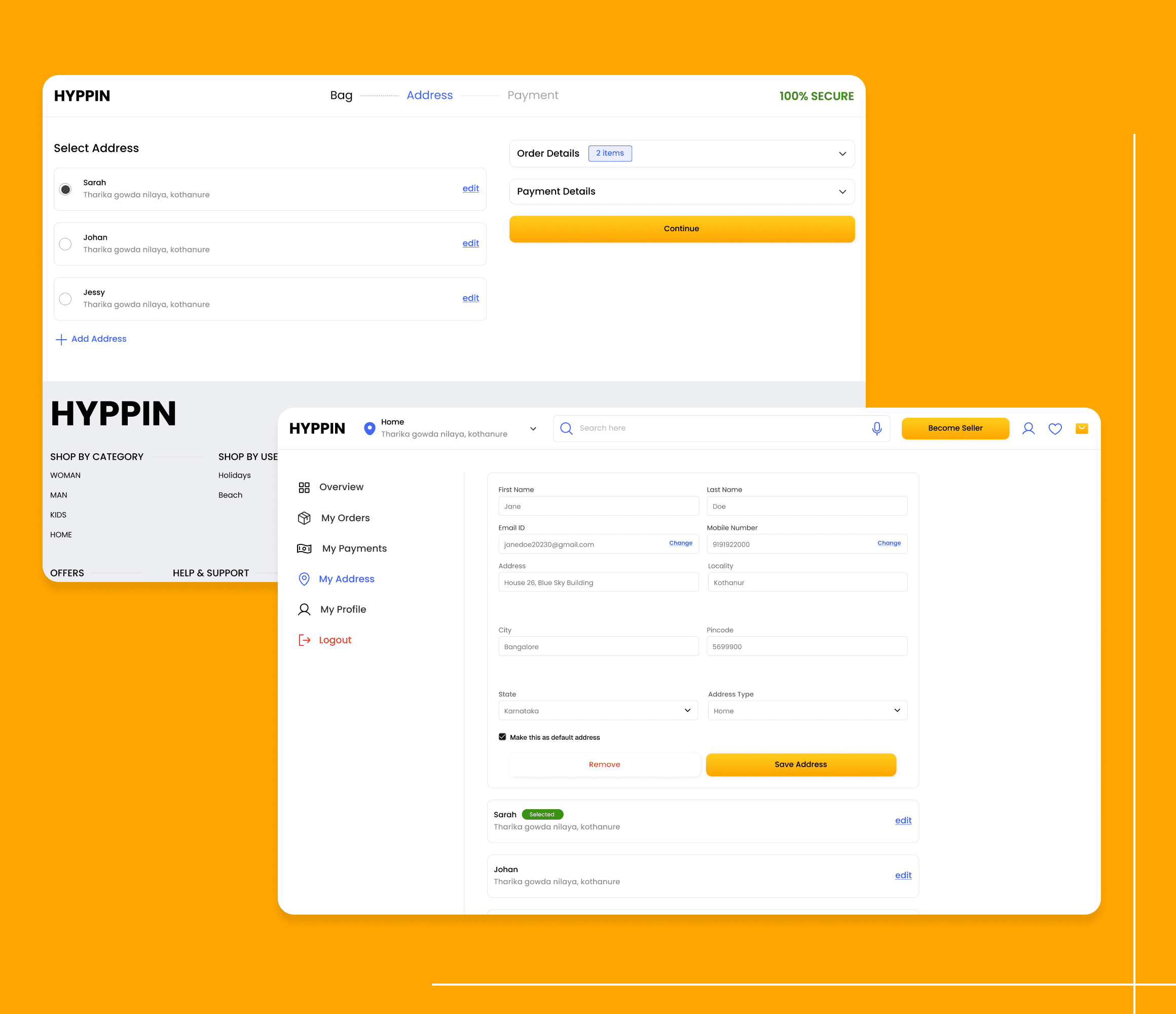
1. Entry & Authentication
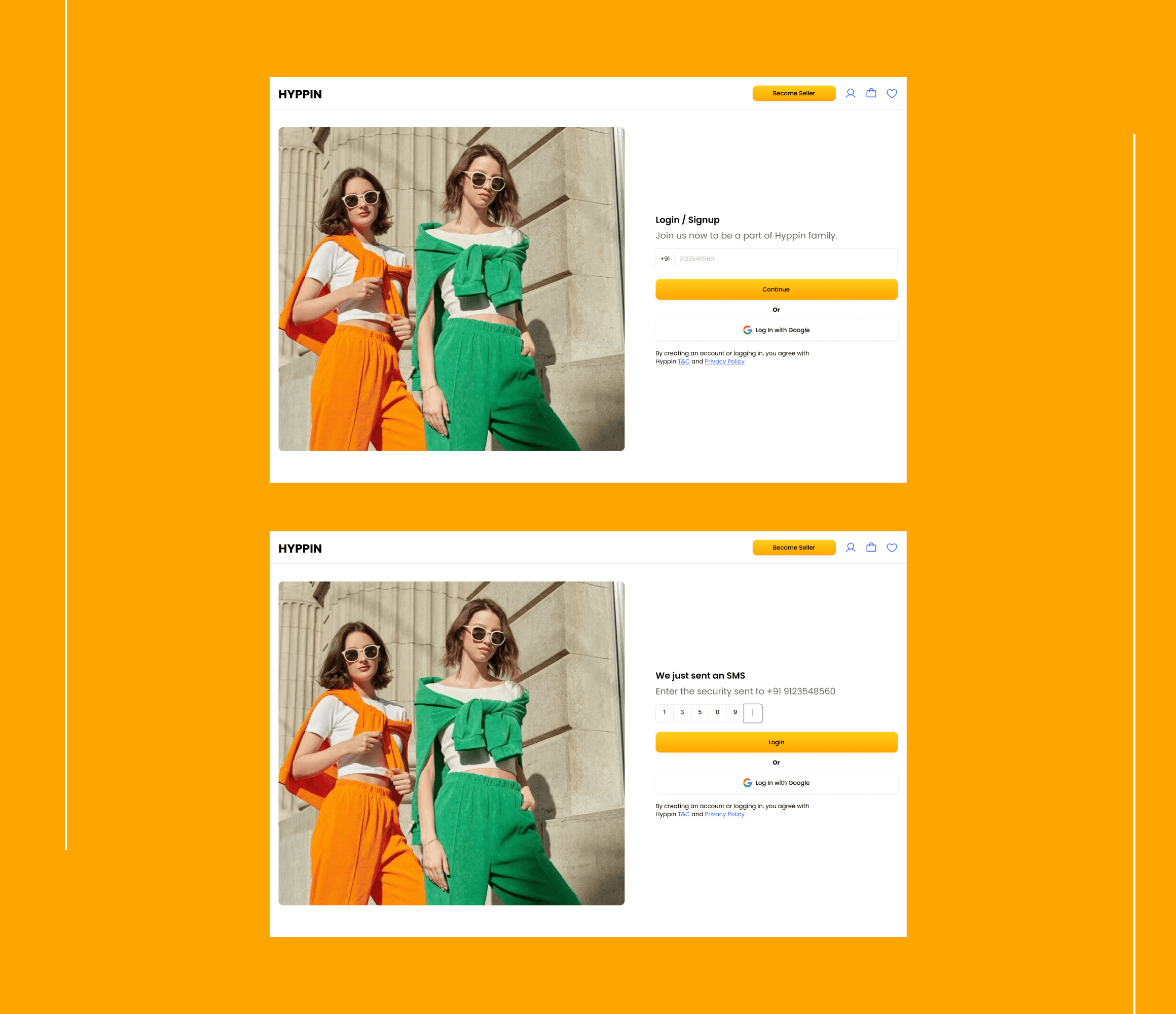
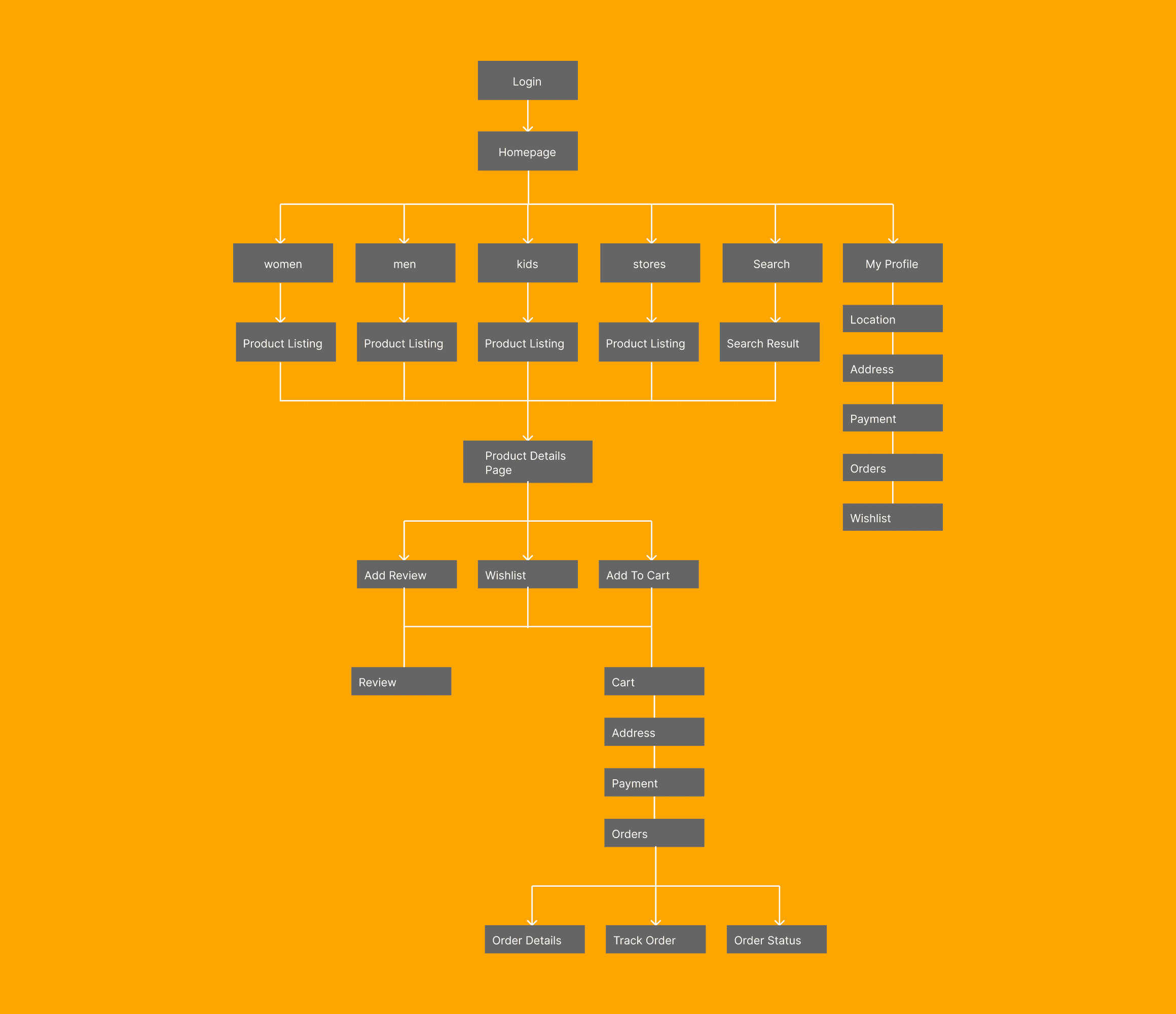
Users begin with a login followed by OTP verification.
Instead of long sign-up forms, OTP-based authentication was chosen to reduce cognitive load and speed up access.
Why this matters:
Reducing friction at entry increases the likelihood of users completing the journey.
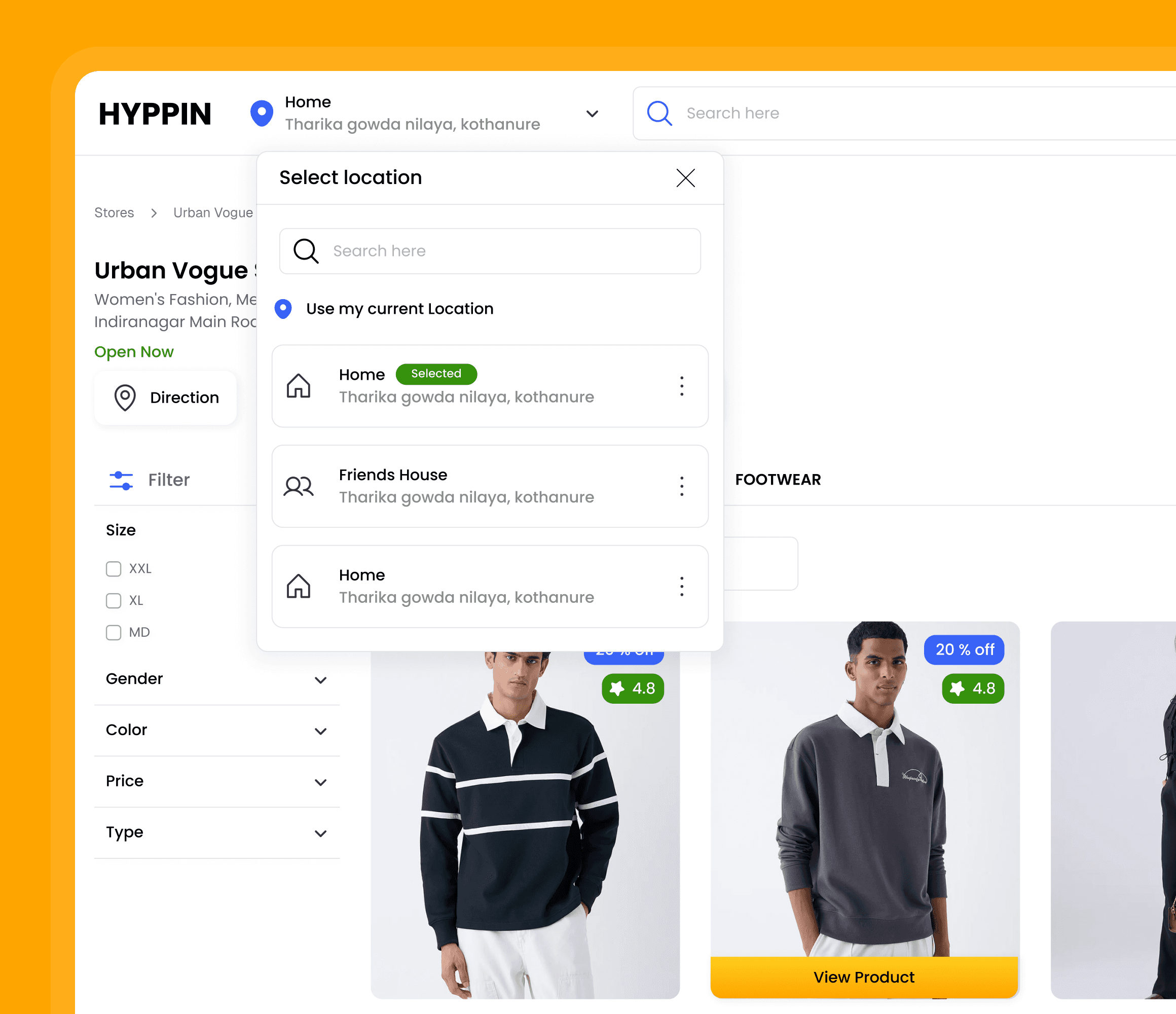
2. Location as the Foundation
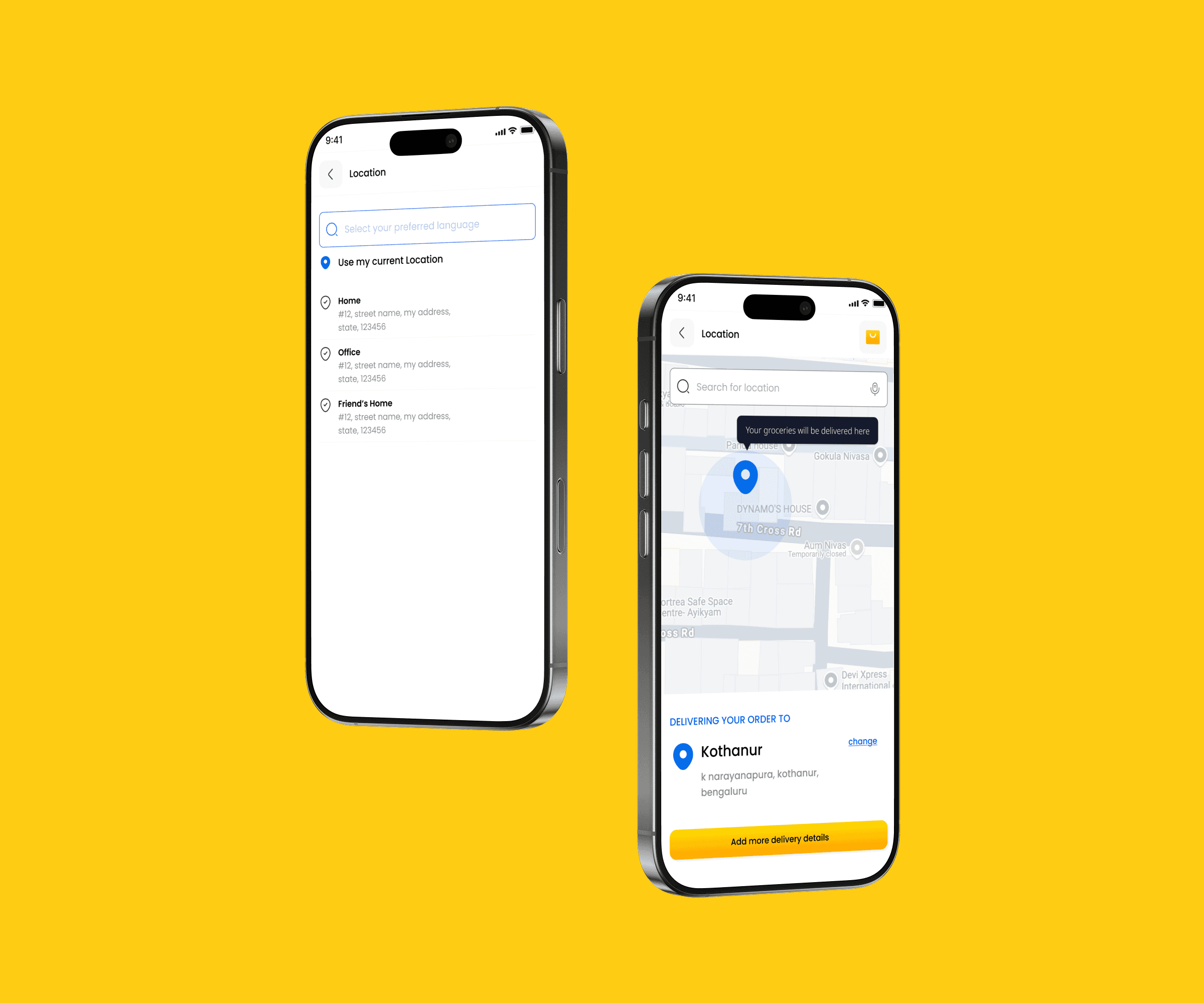
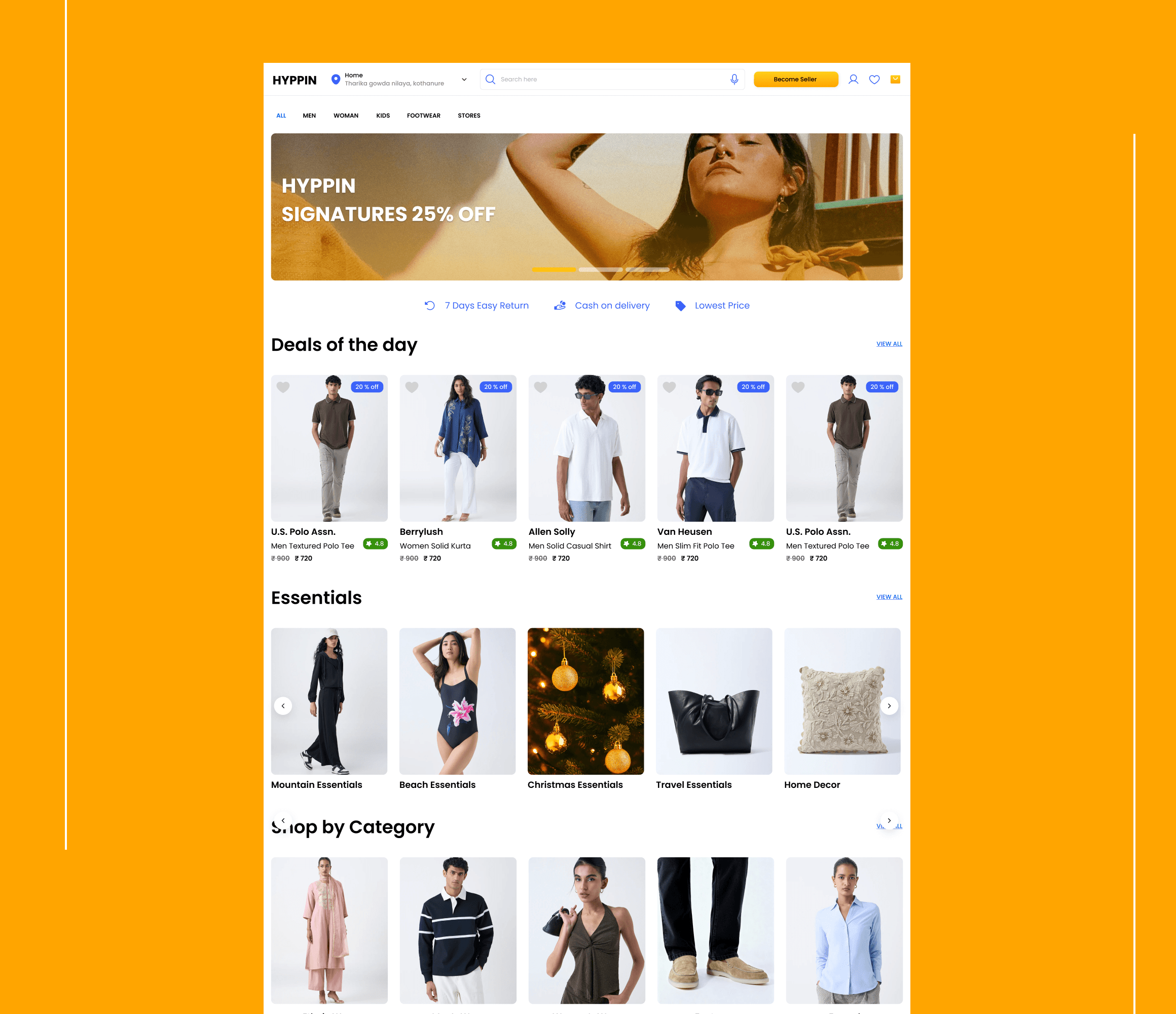
Once verified, the system uses the user’s location to personalize the experience.
The homepage immediately reflects nearby shops instead of generic product listings.
Why this matters:
Hyperlocal relevance must be visible immediately for users to trust the platform.
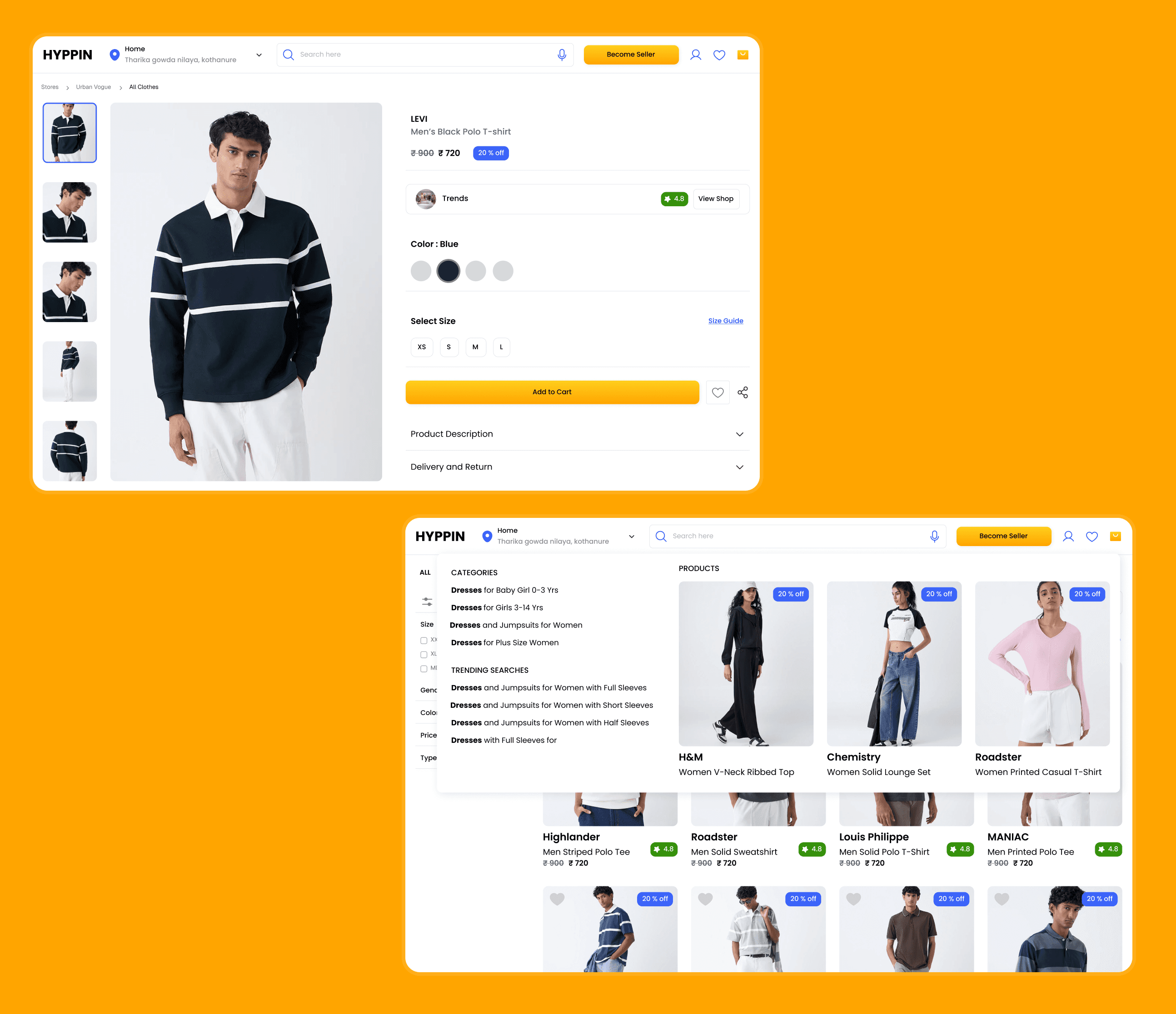
3. Familiar Browsing Patterns
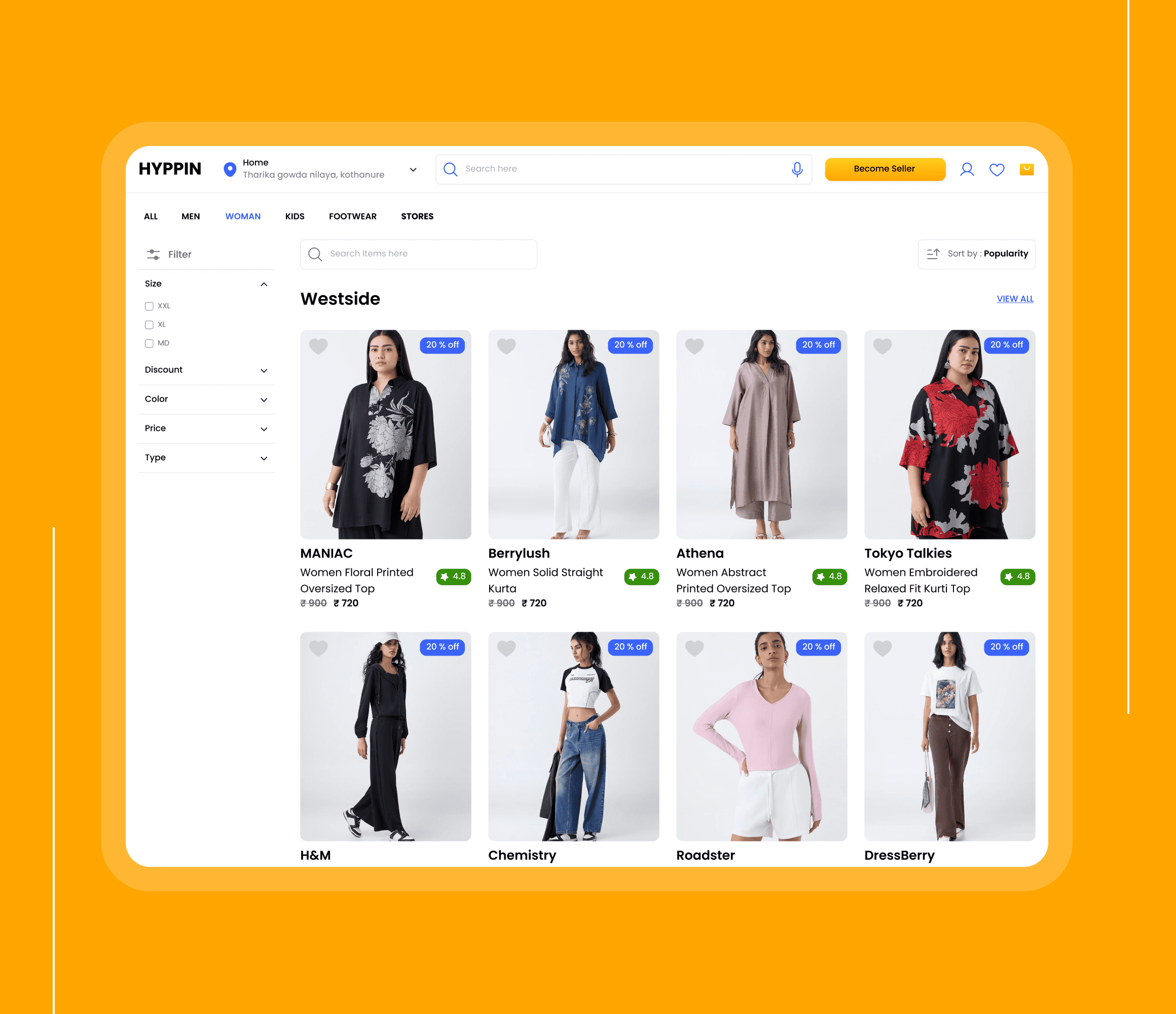
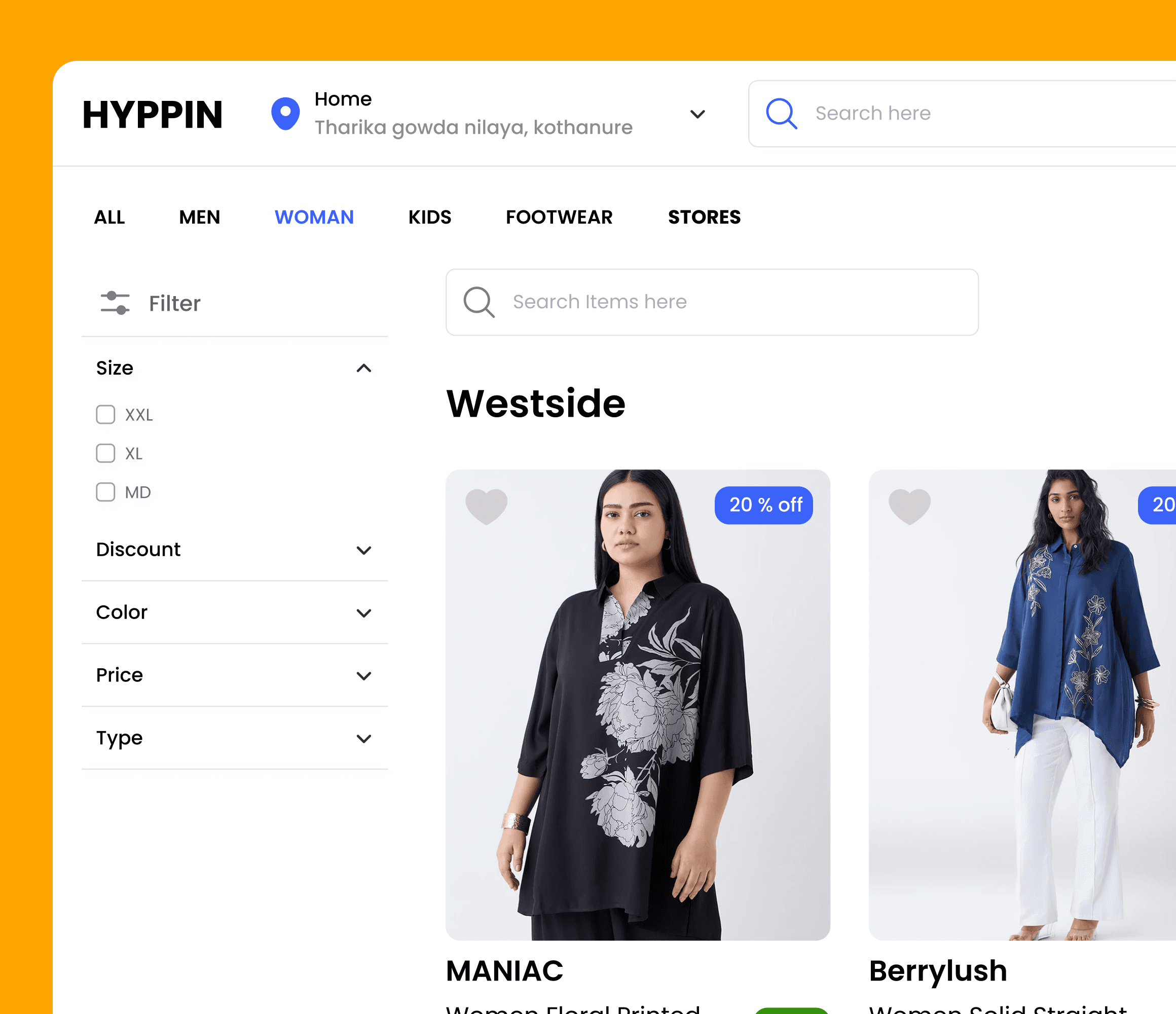
Products are organized using familiar e-commerce categories such as Men, Women, and Kids, ensuring users don’t need to learn a new interaction model.
Why this matters:
Recognition over recall reduces mental effort and increases confidence.
4. Filter-Led Discovery
Filters allow users to narrow down:
Categories
Specific local stores
Product preferences
This prevents endless scrolling and helps users reach relevant shops faster.
Why this matters:
Local marketplaces can feel cluttered without strong filtering mechanisms.
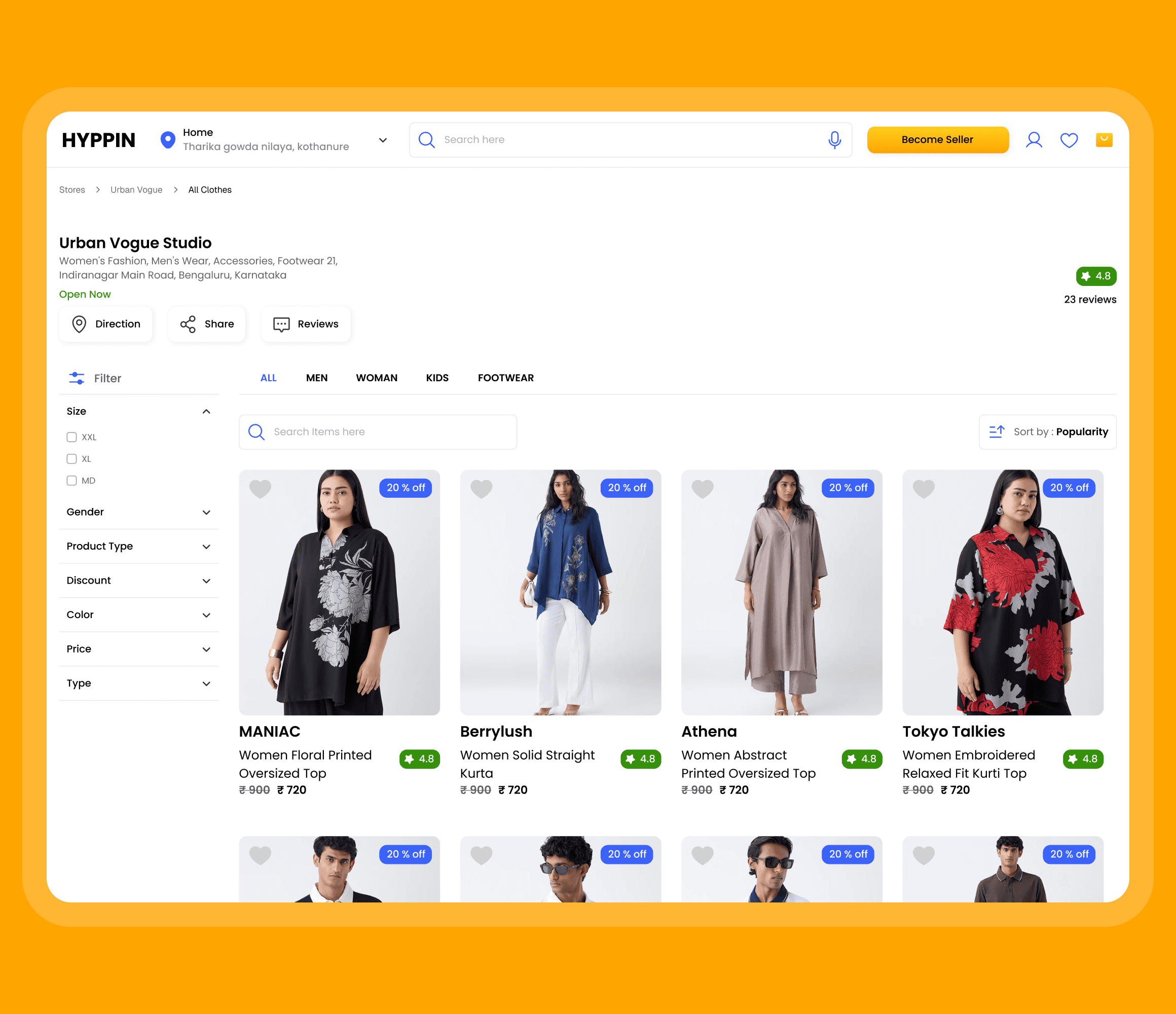
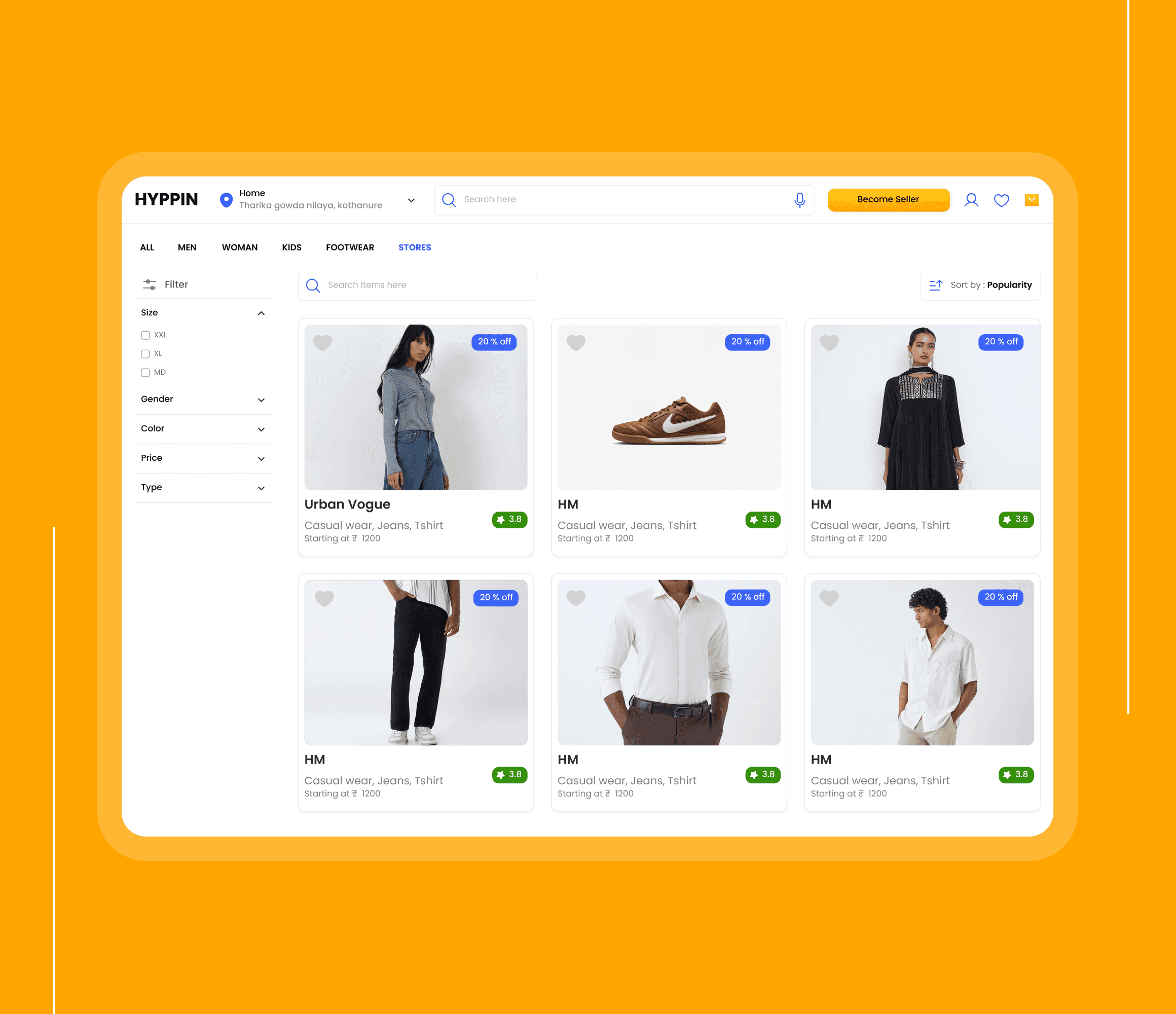
5. Shop Overview Experience
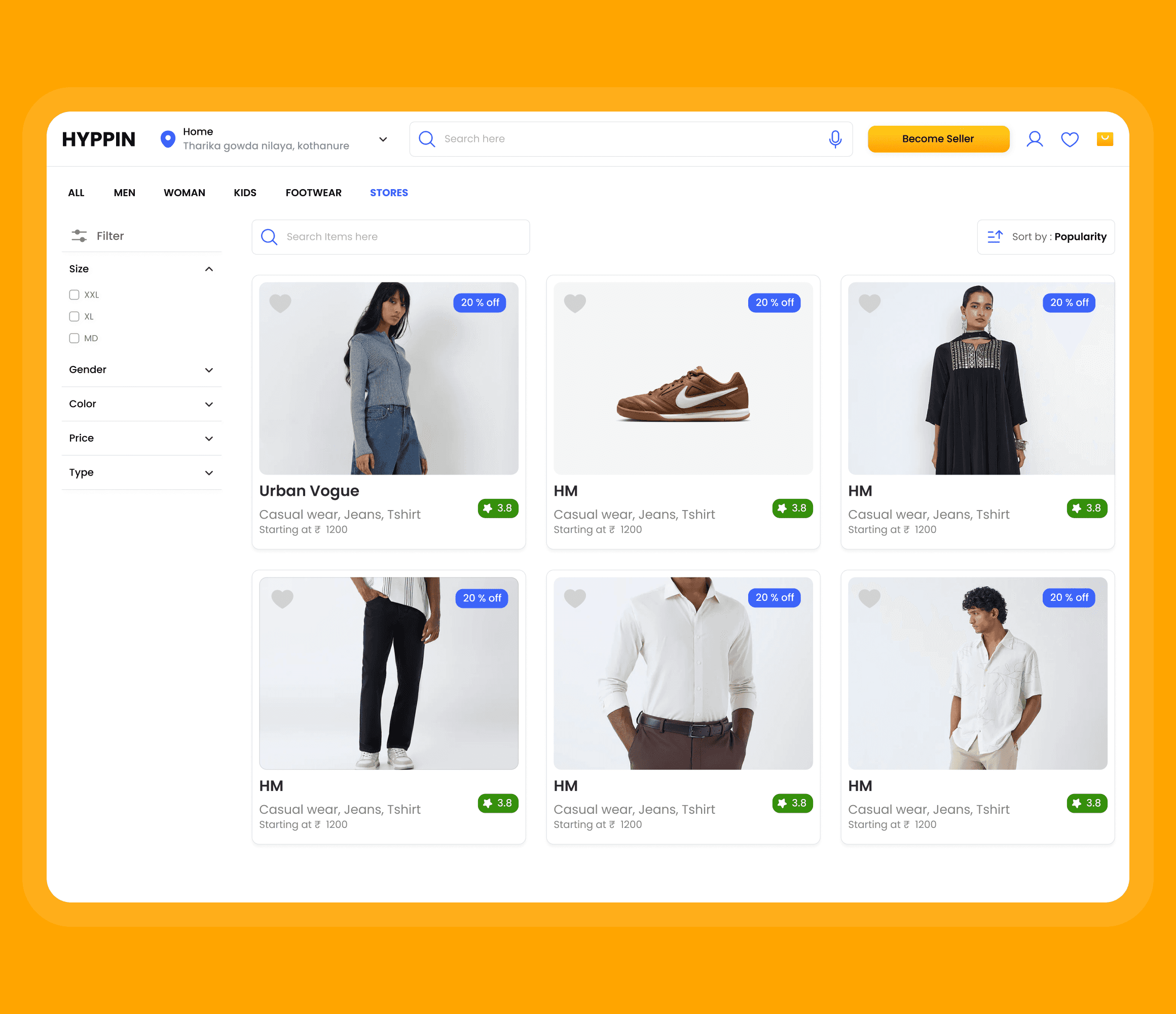
Instead of focusing only on products, Hyppin emphasizes store-level discovery.
Users explore items within a specific shop, reinforcing familiarity and trust.
Why this matters:
Users trust sellers they recognize more than anonymous listings.
UX Principles Applied
What worked well:
Proximity Bias: Users prefer nearby options
Recognition over Recall: Familiar layouts reduce friction
Friction Reduction: OTP login simplifies onboarding
Trust Building: Store-led discovery increases confidence
Outcome
The final flow enables users to:
Enter the platform quickly
Discover relevant local shops effortlessly
Browse products with clarity and confidence
Shop online without losing the familiarity of offline retail
Hyppin successfully translates neighborhood shopping into a digital-first experience while preserving trust and simplicity.